
Miami County Owner Record Now
Miami County keeps its working owner roll with the Assessor. Beacon is the tool that displays it. The county connects its Schneider Beacon system through the GIS and Tax Property Information page. When Beacon will not load, help remains close. The Auditor and Treasurer tax lists still offer address, owner-last-name, parcel, and tax-year routes into the same roll.
| Owner Name | Person, trust, estate, or entity listed for assessment |
|---|---|
| Mailing Address | Where tax notices go, not proof of occupancy |
| Situs Address | The physical location used to find the parcel |
| Last Sale Date | A transfer clue when the card provides it |
| Deed Reference | A document or book/page key for the Recorder check |
Start by matching the parcel and the situs. Then copy the owner name exactly as displayed, initials and entity suffixes included. The owner of record is strong, but the county cautions that current tax-year data may not always be ready. A mailing address never shows who occupies the land.
Interpret Miami County Roll Fields
A tax-list result splits into District Number, Parcel Number, Name, Tax Year, and Property Address. The screen warns it is unofficial. Use it to pin the correct parcel, then request the Assessor card or open Beacon for fuller context.
- Owner of record
- The owner named on the roll for the parcel.
- Assessment roll
- The county tax record organized by parcel and year.
- Situs
- The physical location, which may not match the mailing address.
- Recording lag
- Time between a deed recording and a later roll update.
An out-of-county address may just be a mailing address. Never read occupancy into it. Keep both addresses and the displayed year so anyone can repeat the check.
Gauge Miami County Record Freshness
Miami County publishes no fixed schedule for ownership updates. Skip the calendar guessing. Compare the roll's tax year, any last-sale clue, and the newest deed's recording date instead of assuming every transfer appears after a set number of days.
Tax information measures ownership on March 1 of each cycle. That quirk explains why a bill can carry a name from before a later transaction. Three offices hold the trail. The Assessor, Auditor, and Recorder each maintain a distinct part of the public record.
Recent sale. The roll can trail a closing; the newest deed for the same legal description is the more current transfer record.
Confirm Miami County Current Ownership
Use the tax roll to start. The Recorder verifies it. The county's online land-record description and its subscription agreement disagree about historic depth. Either way, search the Recorder first for the most recent deed, and use the counter or mail when an image is missing.
- Search the address and record the parcel, roll owner, and tax year.
- Note any last-sale date and deed reference on the parcel card.
- Search the Recorder under that owner as grantee and narrow the dates.
- Compare the deed's legal description with the roll entry.
- Grantee
- The party receiving an interest in the deed.
- Vesting
- The way the recorded interest is held.
- Registered agent
- The state filing contact for an entity, not necessarily its property owner.
For decisions that matter, ask the Recorder or Assessor to resolve a mismatch. The Miami County deed search covers full instrument detail. Here, match the latest grantee and tract.
Resolve Miami County Parcel Changes
Splits and combinations can break an old parcel number. County tax-list instructions offer a precise fix. Search the owner's last name when a parcel changed within the last two years. Review every tract that comes back rather than assuming the old number survived intact.
A deed may cite a parent tract, an exception, or a subdivision lot. The current roll may show new tax parcels instead. Match the subdivision, lot and block, or metes-and-bounds text. GIS helps orient the pieces. Its drawn lines still do not replace a survey.
Note: Preserve both old and new parcel numbers when a split or merger appears in Miami County records.
Check Miami County Entity Owners
An LLC or corporation on the roll needs a second look. Copy the exact roll name into the Indiana Business Search. It offers Contains, Starts With, and Exact modes. It also has business ID, filing number, registered-agent, status, and address fields.
The entity result confirms which organization matches the recorded name. Owning the parcel now is a separate question. An agent address is not the situs. A governing person never replaces the deed grantee.
Trusts and estates deserve the same care. A probate case may explain why an estate stays on the roll. But a death record alone transfers nothing. Look for the recorded affidavit, executor deed, transfer-on-death instrument, or other conveyance.
Reach Miami County Records Offline
A failed search is not a dead end. The Assessor answers at 765-472-2230, and the office sits in Room 200 at 25 N Broadway in Peru. The Recorder's counter is in Room 205. Mail requests can include a self-addressed stamped envelope.
Indiana APRA, IC 5-14-3, backs a reasonably particular request for an inspectable card that is not posted online. Name the custodian, parcel, address, year, and record. Ask for inspection or electronic delivery first when only one field needs checking.
The county's entry point lives on its official GIS and Tax Property Information page.
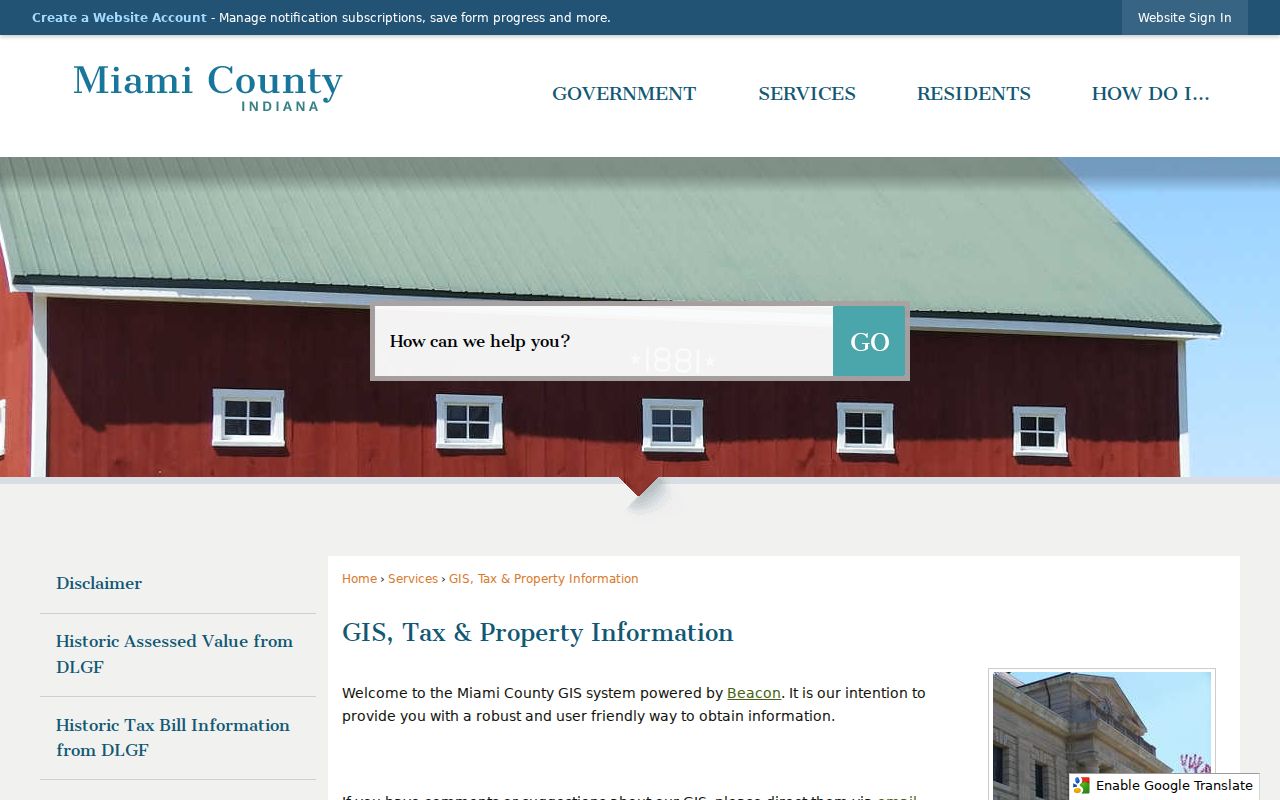
Use that county page, then verify date and deed.
Compare Miami County Office Roles
Four offices shape one record. The Assessor handles assessment. The Auditor processes transfers, deductions, mapping, and tax calculations. The Treasurer bills and collects the tax. The Recorder preserves deeds and other permanent instruments. A current owner search succeeds because all four roles meet at the parcel number.
When the tax-roll name and the deed grantee disagree, take the conflict to the office that owns that field. A roll question goes to the Assessor with card and deed references; an index question goes to the Recorder with the instrument number.
Remember, the county labels its tax list unofficial and Laredo a working index subject to error, so cross-checking belongs in any current owner answer.
Read Miami County Tax Years
A tax year is essential context for a current owner result. The Treasurer and Auditor interfaces let a user select a year, and the county warns that current-year material may lag. Save the year with the owner name. An older roll may be accurate for its own assessment date while no longer answering who owns the property today.
The county's tax information says ownership is measured as of March 1 for the tax cycle, with bills due in two later installments. That administrative schedule explains why an owner can appear on a bill after a deed has changed the recorded interest. It does not make the tax bill a title record. Compare the named year with the Recorder date.
Personal property is not displayed in the county property-tax GIS information. A result about a land parcel should not be read as a complete inventory of assets owned by the named party.
Read the Newest Miami County Deed
Deeds, mortgages, liens, easements, leases, plats, and surveys all pass through the Recorder. For ownership, start with one deed. It is the newest one matching the parcel's legal description. A later mortgage or release can encumber the land without changing the owner.
Tapestry allows searches by grantor, grantee, date, document number, consideration, legal description, and document type. Enter the roll owner as grantee. Narrow next by date and tract. A parcel-card reference can be searched directly.
Read the image. Index lines can omit details or carry working-index errors. The Recorder's page describes scanning, indexing, and microfilming, with certified copies available, though a certified copy proves contents, not title quality.
Correct a Miami County Mismatch
Begin by naming the disputed fact. A wrong situs, parcel number, value, or owner field belongs with the Assessor or Auditor. A misspelled party, wrong document type, or missing image belongs with the Recorder. Keep evidence for the correction request. Save a screen capture, search URL, parcel or instrument number, date, and the fix you want.
Indiana APRA permits inspection and copying of public records subject to exemptions. Requests must identify the material with reasonable particularity. Ask for a parcel card for a named year. Ask for a recorded instrument by document number. Never ask an office for everything about an owner.
If the mismatch is a private title dispute rather than a clerical error, the office may need a corrective deed, court order, or other authorized instrument, so preserve both sources and seek suitable legal help before relying on the result.
Save a Miami County Owner Check
A reproducible owner check saves more than a name. Record the exact address entered, the parcel number returned, the owner spelling, mailing address, situs, tax year, search date, and the URL or office used. Add the newest deed's document number, recording date, grantee, and matching legal-description phrase. This small record makes later changes visible.
Never erase an earlier result when the roll changes. Keep both dates and label each source. A new name may reflect a transfer, correction, parcel split, or tax-cycle update. Comparing snapshots shows when the record changed.
Contact an office with only the fields needed, and ask a direct question. Has the attached deed reached the current assessment roll? Skip certification when a screen suffices. Order the authoritative copy and review when a transaction depends on the answer.
This habit also limits privacy risk. Keep parcel evidence for the purpose at hand, and never treat a public mailing address as a residence claim. The current owner record identifies the assessed party, while the recorded deed documents the transfer.
Protect Miami County Owner Data
The Recorder offers a free property-fraud alert. It notifies a subscriber when a matching name appears in a document. It cannot block a filing, verify a deed, or prove fraud. Treat any notice as an early signal. Check it against the recorded image. Owner records support lawful purchase checks, estate work, tax review, boundary questions, and civic research, while Indiana's Address Confidentiality Program may supply a qualifying person a substitute address that no workaround should defeat.
Lawful use. A public Miami County owner name is not permission to harass, stalk, intimidate, or expose protected personal details.
A roll entry is not a title opinion. Obtain the recorded instrument and suitable professional review whenever legal rights depend on the answer.