
Read Miami County Property Tax Records
Three offices build Miami County property tax records together. The Assessor sets market value-in-use and the assessment data behind it. The Auditor records transfers, administers deductions, maintains parcel mapping, calculates taxes, and runs tax sales. The Treasurer sends the bills, collects payments, tracks delinquency, and certifies parcels for sale. Read the sources side by side. That way the year, property key, value base, deductions, and bill status stay clear. No office's role gets confused with another's.
| Field | What It Shows | Where |
|---|---|---|
| Land and improvement value | Components that form gross assessed value | Assessor / tax roll |
| Gross assessed value | Market value-in-use before deductions | Assessor |
| Deductions | Approved reductions allocated to the parcel | Auditor |
| Tax bill and status | Annual charge and collection condition | Treasurer |
| District and tax year | The jurisdiction and annual roll attached to the row | Auditor / Treasurer lists |
Assessed value is simply the figure Indiana's property-tax system uses. It is not a sale price. The amount due is not the home's value either. After valuation, deductions, local rates, credits, and taxing districts all shape the final bill.
Search Miami County Tax Fields
The Treasurer tax list and the Auditor list run on the same core clues. One field is enough to begin. The live guidance cautions against overfilling the form, and after a parcel was split or combined in the prior two years it recommends a last-name search instead.
| Tax-list field | Input | Result use |
|---|---|---|
| Property / Parcel Number | Exact parcel key | Match a known tract |
| Name | Owner's last name | Find rows when a key changed |
| Property Address | Street and city | Start from a known site |
| Tax Year | An available year | Keep annual comparisons aligned |
Each result shows district number, parcel number, owner name, tax year, and property address. The Treasurer page lists 25,981 total rows. It caps each visible page at 100. Both tax lists state their results are not for official use. Their live update dates also differ from each other.
Look Up a Miami County Tax Bill
Keep both the parcel key and tax year with every lookup. Find the property by address first. Then switch to the exact parcel number. That habit prevents a same-street mix-up and stops a current row from being compared with a prior year by mistake.
- Search the Treasurer list by address, with the city included.
- Confirm the district, parcel number, owner name, and selected year.
- Compare the Auditor-side row and assessment information.
- Check the official payment route for the bill and current collection status.
- Contact the responsible office when the two live views differ.
- Assessed value
- The property's market value-in-use within the assessment system.
- Levy or tax rate
- The approved tax amount or rate applied through local taxing units.
- Homestead deduction
- A statutory reduction for a qualifying principal residence.
- Tax lien
- The county's claim tied to unpaid property tax.
March 1 Sets Miami County Ownership
March 1 ownership controls who owes taxes for that year. The county tax-information page says so. Property taxes are paid in two installments. They are due May 10 and November 10 when those dates do not fall on a weekend. Timing explains why a recent sale can look odd. The deed date, the owner on a tax list, and the person responsible for a bill may not match. That mismatch can show up at first glance. Keep the tax year beside every saved row. If ownership changed near an assessment or billing cycle, compare the recorded deed. Then ask the Auditor or Treasurer how the account was applied. The county also warns about current-year data. Its GIS and tax page may lag behind events.
Miami County Deductions Change Bills
The Auditor runs deductions and homestead allocations for Miami County parcels. These lower the taxable base or shift how relief is assigned; they do not turn gross assessed value into a sale price. The county has a defined deduction process. It does not guarantee that every owner qualifies for a homestead, age-based, disability, or veteran benefit. Check the parcel record for deductions already carried. For a new filing or a correction, use the Auditor's current forms and rules. A mailing address different from the situs proves nothing by itself. Eligibility comes from the statute and the filed facts. For a year-to-year review, write down gross assessed value, each deduction, net taxable value if shown, and the taxing district. Compare like tax years only. A deduction present in one cycle but missing from another can explain a bill change even when land and improvement values barely moved. Before treating the screen as an error, ask the Auditor which filing or allocation controls the parcel.
Miami County Enters a New Cycle
Indiana's statewide cyclical reassessment starts July 1, 2026. It covers taxes payable in 2027. The four-year program assesses roughly one-quarter of parcels each year with physical inspections. That schedule matters when two nearby parcels show value changes in different years. The state DLGF site also provides the official assessed-value search.
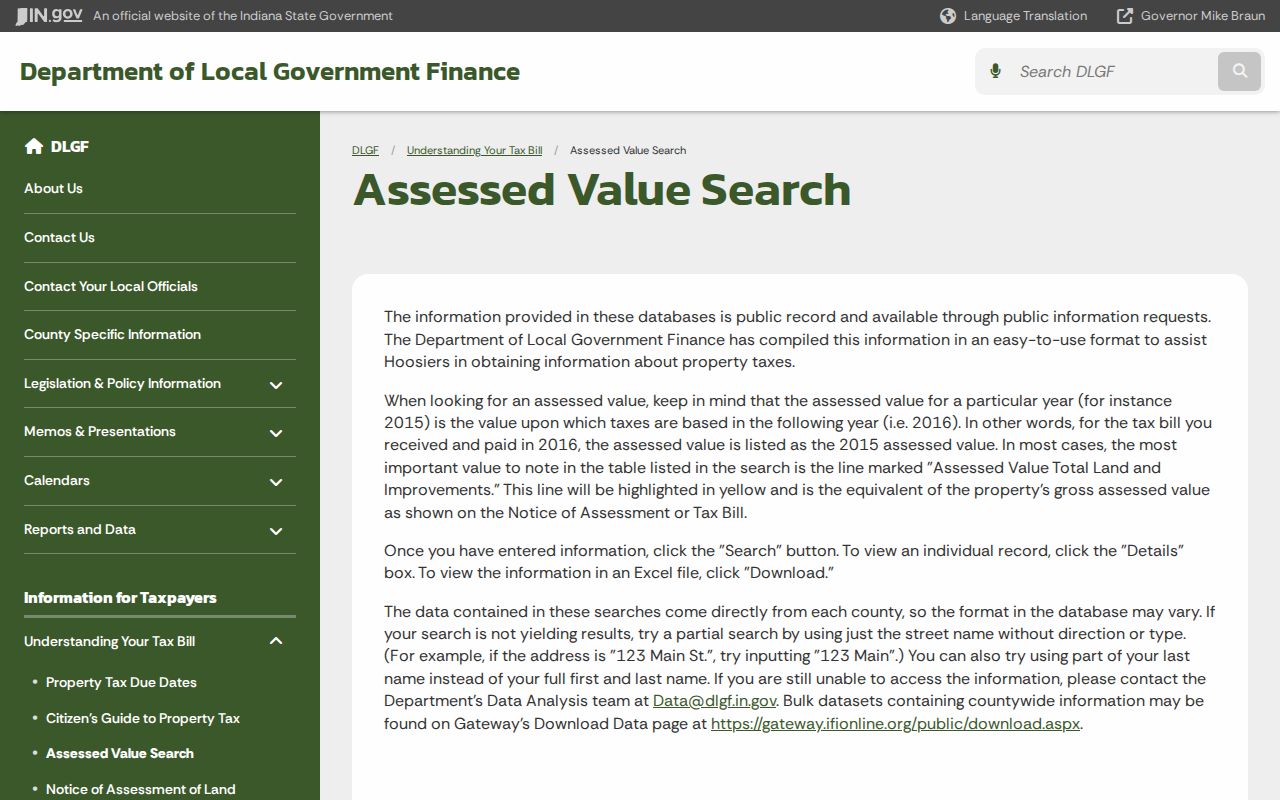
The state source adds helpful historical context. Still, the county parcel number and tax year remain the core matching keys for Miami County property tax records.
Contest a Miami County Assessment
An owner who disputes an assessment starts with the township or county Assessor. That owner files Indiana Form 130 for review. The assessment notice controls the filing window. The general deadline is June 15 or 45 days after notice, whichever is later. Confirm the current notice and DLGF instructions before filing. PTABOA, the Property Tax Assessment Board of Appeals, hears the county-level appeal. Strong evidence ties to the parcel and valuation date. Photographs and a recent appraisal count. So do comparable sales, construction facts, land characteristics, and errors in the property record. Paying a tax bill and challenging value are separate duties. Ask the county how a pending appeal affects payment.
Protect the filing date. Use the later of June 15 or 45 days after notice only after confirming the deadline printed on the current assessment notice.
Miami County Delinquency Records
Delinquent property tax records in Miami County split between two offices. The Treasurer tracks delinquency and certifies parcels for tax sale. The Auditor then handles tax-sale administration. A published sale notice can list the owner, parcel key, and property address. It can also list the minimum bid and delinquent amounts. Check any future sale date against the current county notice. Use the SRI auction route before acting.
A tax-sale certificate is not a deed. Indiana's process builds in notice and redemption steps. The county FAQ separates tax sales from sheriff sales. The 2024 advertisement warns bidders to verify address and key-number data themselves. Anyone digging into a distressed parcel should keep the sale year, certificate status, redemption details, and any later deed on file. The list alone does not settle ownership.
The county once announced an online commissioner's certificate sale for February 21, 2025 through ZeusAuction. That dated notice proves access methods can change. It does not mean the same site or schedule governs a later sale. Start with the current Treasurer and Auditor pages. Then match the advertised key number to the tax list and the Recorder before trusting an address. An address is supplied for convenience and may not define the tract.
Confirm Miami County Tax Records Offline
The Miami County Assessor sits at 25 N Broadway, Room 200, Peru, and lists 765-472-2230. The Auditor is in Room 206 of the same courthouse and lists 765-472-3901 ext. 1214. The Treasurer is in Room 101 and lists 765-472-3901 ext. 1250. These offices are the direct fallback. The web list, assessment roll, and payment account can seem out of sync.
Request inspection or a copy by parcel number, tax year, and record type. Indiana Code 5-14-3 is the Access to Public Records Act. It backs reasonably particular requests for inspectable public records. Exemptions and fee rules still apply. For a value-only comparison rather than a bill review, the Miami County property-value page separates assessed value from market and recorded sale figures.
A focused request might target the assessment record for one parcel and year. It might also cover the deduction history kept on that account. Or it could seek the tax-sale notice tied to a listed key. State whether inspection, an ordinary copy, or a certified record is needed. Do not ask one office to certify another office's data. The Assessor answers valuation facts. The Auditor answers transfer and deduction administration. The Treasurer answers collection and payment status.